A portrait with context
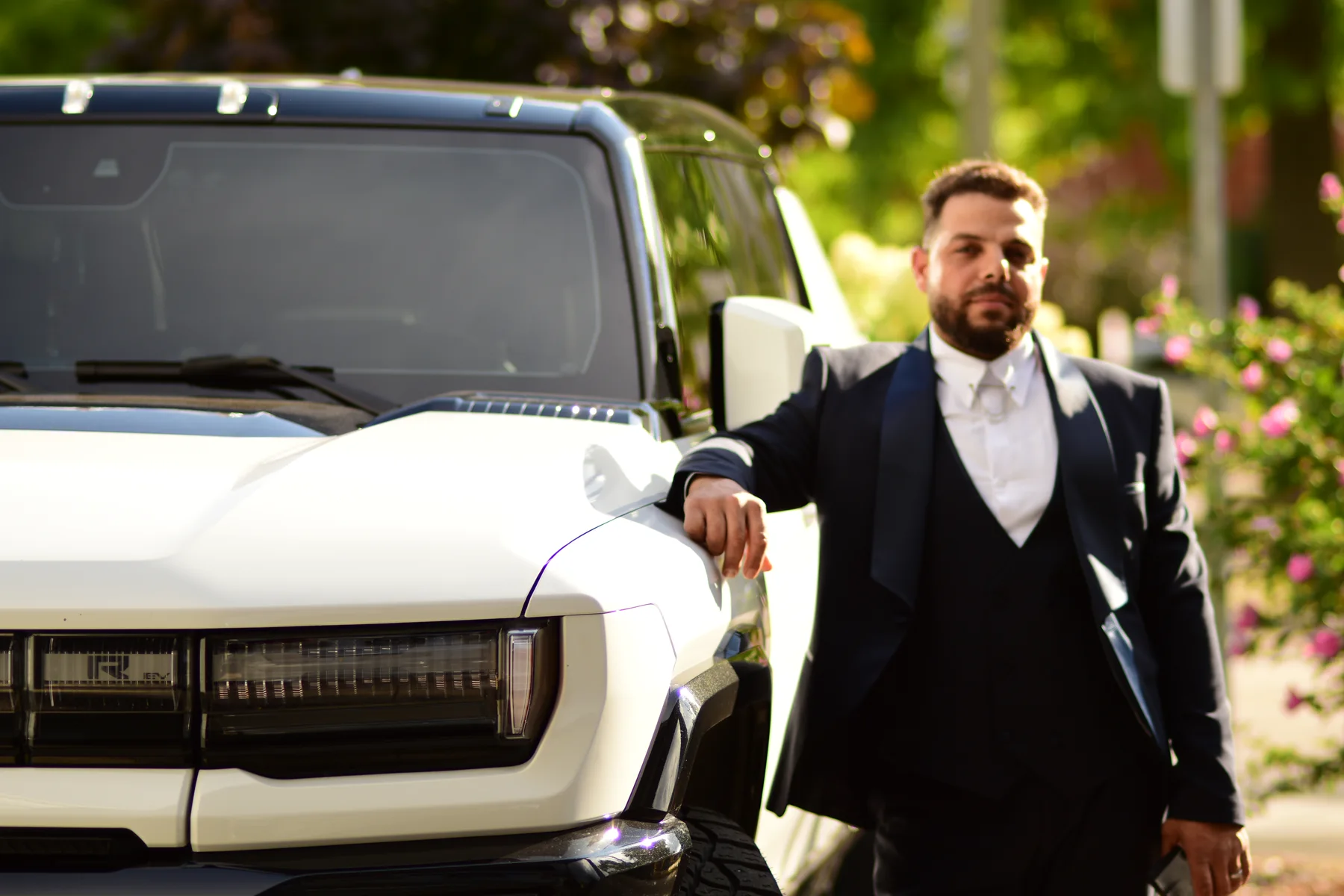
One photograph places a formally dressed subject beside a white vehicle, with greenery and warm daylight behind them. The setting is still part of the portrait: the vehicle establishes scale and context, while the face and posture carry the attention. For a similar composition, watch large background shapes and the edges of the frame so they do not compete with the subject.
How proximity changes the image
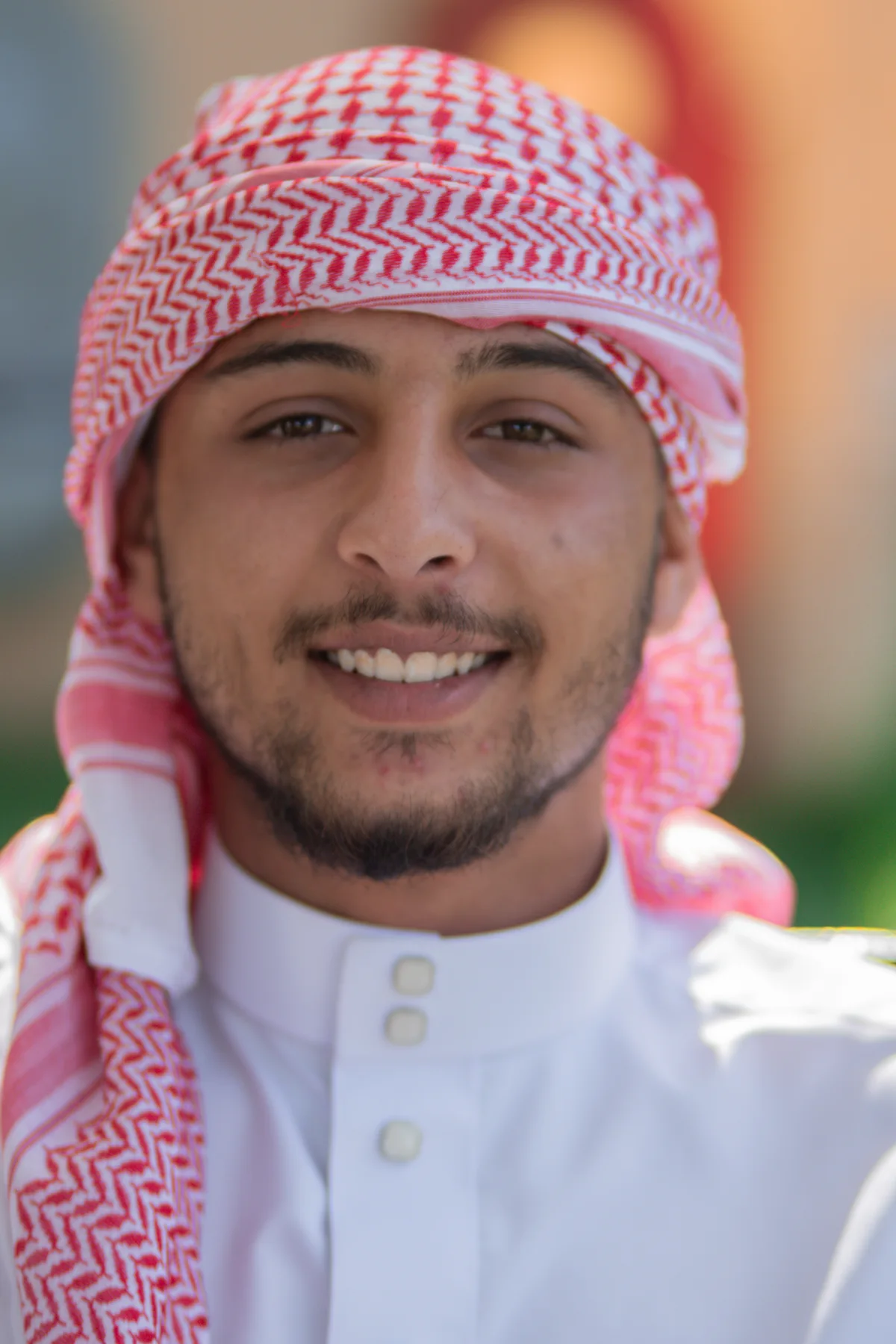
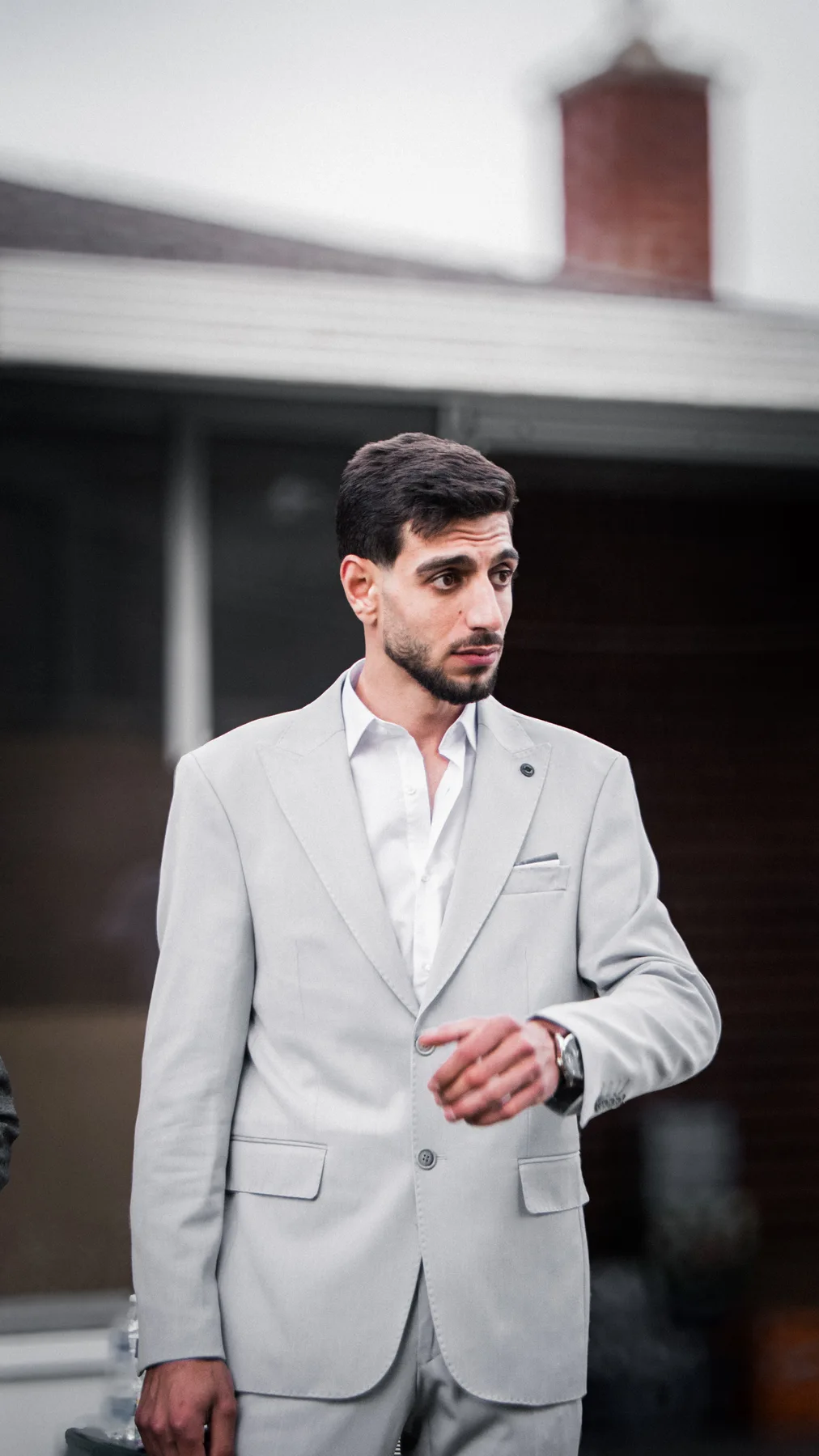
A close-up portrait with a red-and-white headscarf keeps the expression central, with the background falling softly out of focus. Another portrait, featuring a light-colored suit, retains more of the subject's posture and clothing. Neither approach is universally better. The useful question is whether the setting helps tell the visual story or whether the facial expression is enough.
Portraits include objects and gesture
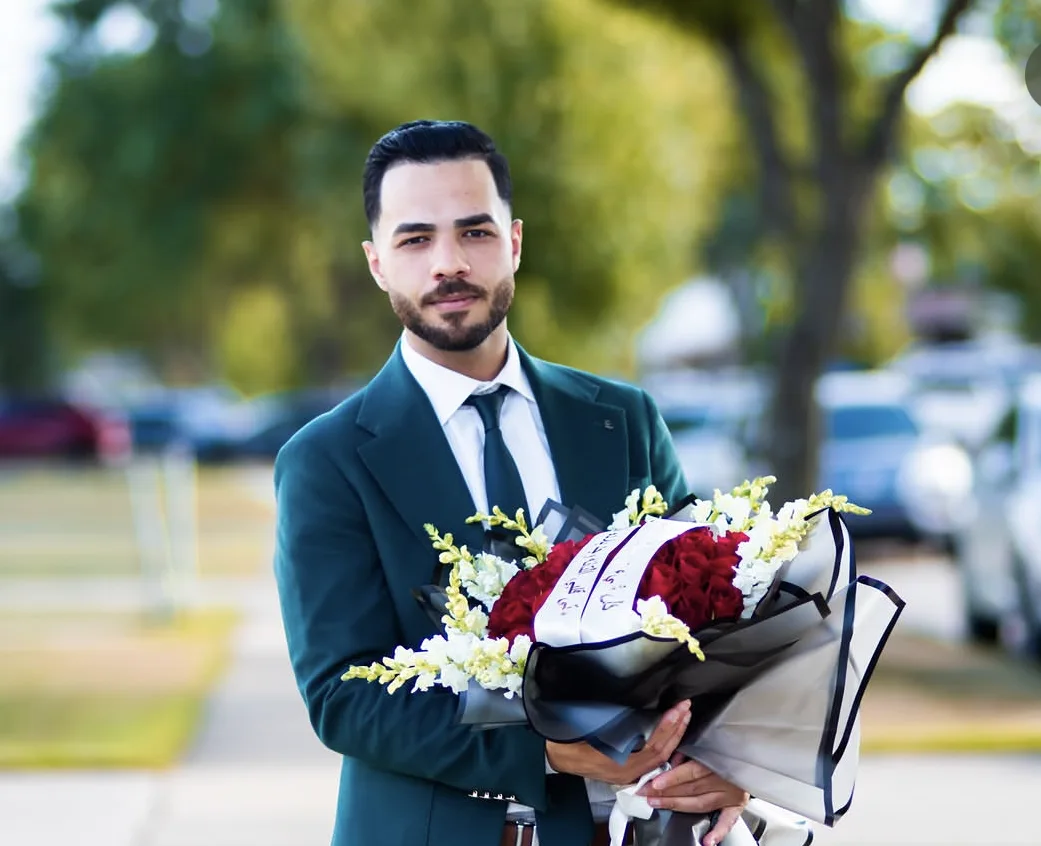
In the bouquet portrait, the flowers contribute a second focal point and give the subject's hands a clear role within the frame. What a person holds can become part of the story rather than a distracting accessory. When making similar images, experiment with camera height, space around the shoulders and the balance between subject and object. Small changes can create a very different mood.
Practical checks for the next session
Before taking a portrait, check four things: whether light supports facial detail, whether the background has distracting lines, whether the hands and gesture are deliberate, and whether you have genuinely different framing options. Review photographs as small thumbnails first, then inspect strong candidates at full size for focus and detail. A small, thoughtful selection is often stronger than many nearly identical frames.