Layered light at dusk
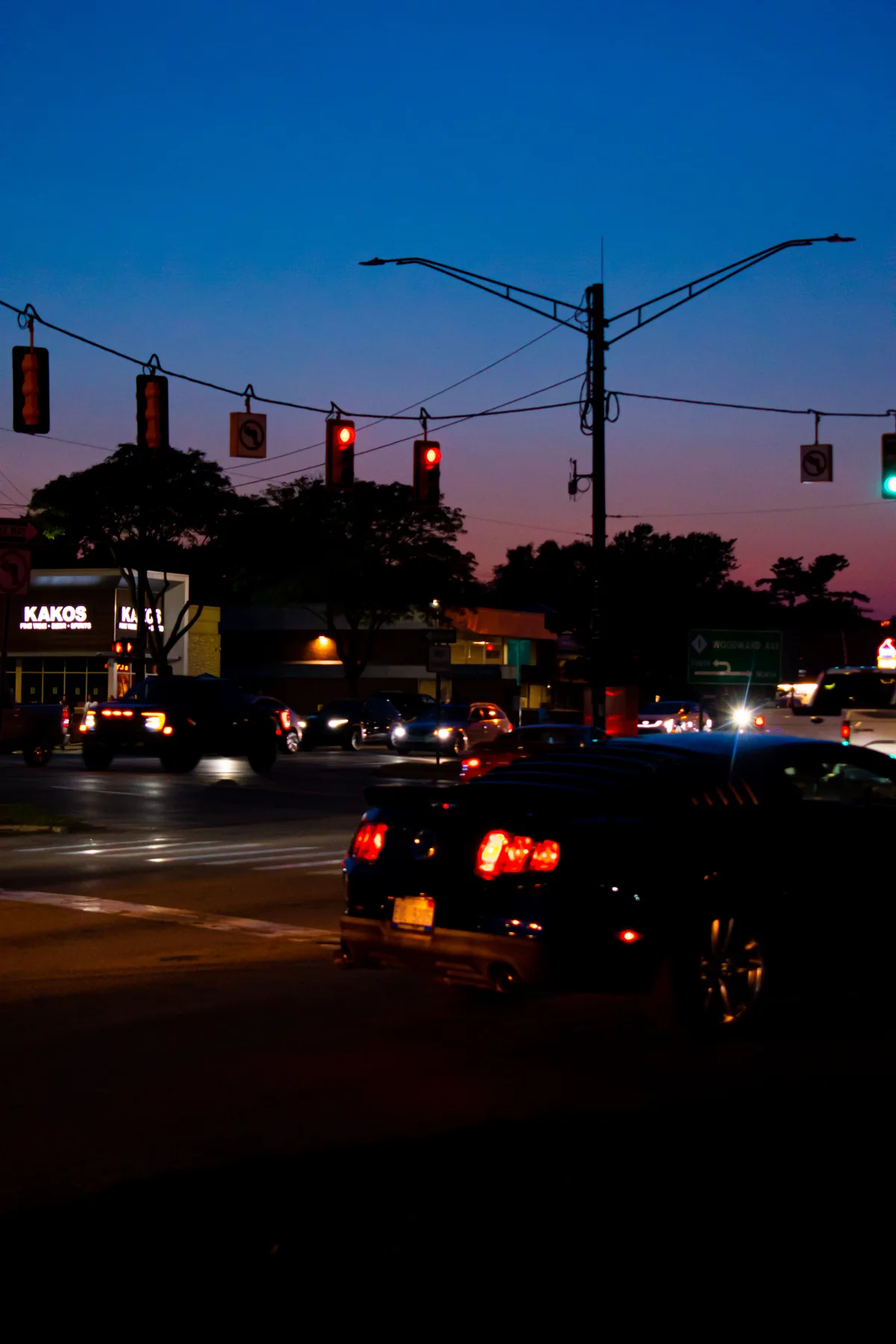
The street image combines illuminated traffic signals and cars with a purple evening sky. This transitional light creates layers: the last daylight remains while artificial lights become prominent. The frame is full of small bright points, intersecting lines and opposing colors. In a similar urban scene, pay attention to traffic direction and the spacing of signals; too many bright objects in one area can dilute the focal point.
When negative space becomes the subject
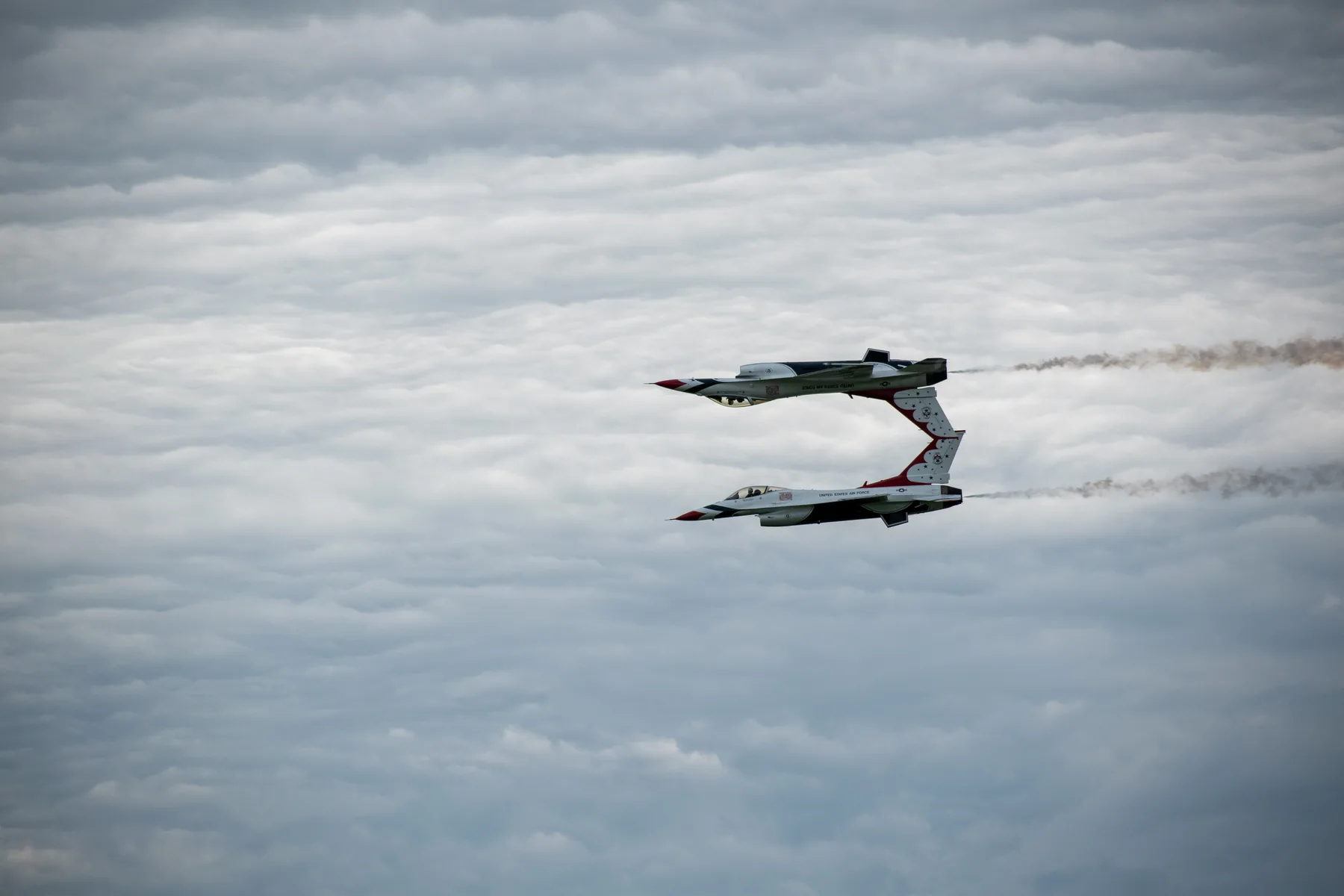
The helicopter occupies only a small part of a frame dominated by sky and water. Rather than adding more objects, the photograph uses empty space to communicate scale and distance. In this kind of composition, where the subject sits in that space influences perceived motion and direction. Compare a centered crop with one that leaves room in front of the moving object and observe how the eye travels.
Depth and the distant skyline
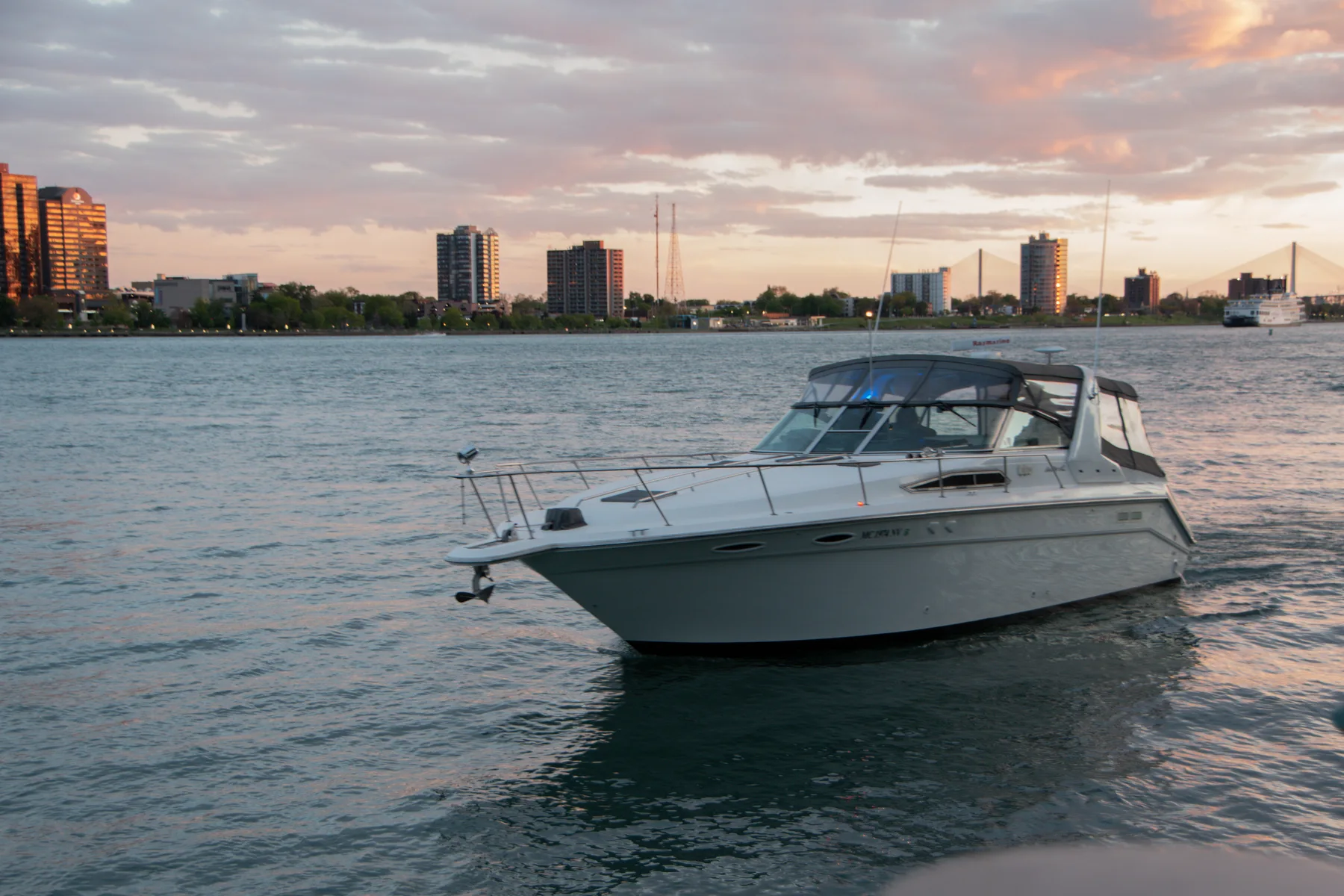
The boat frame contains distinct layers: foreground water, a white boat and distant buildings along the horizon. Those layers establish scale without requiring text on the image. Evening light gives it a quieter rhythm than the busy street scene. With long visible horizons, check that the frame is level and that heavy contrast in the background does not overpower the main subject.
What connects the three images
Outdoor photography does not benefit from a single identical edit. Bright signals and contrasting colors matter in the street view, while cloud detail matters for the helicopter and balanced tones matter for water and skyline in the boat photograph. Correct exposure and white balance per image first, then consider a shared finishing look if the frames will be presented together. Consistency should not erase each scene's character.